One of my close friends is an elementary (k-2) teacher. She is not comfortable speaking openly about the public school system, so I am lending my voice.
Teachers are charged with educating their students in the things we all know…reading, language, phonics, math, science, etc. Teachers are also charged with teaching many other life-skills such as responsibility, manners, courtesy, collaboration, speaking and listening skills and problem-solving just to name a few. Teachers must be aware of situations and dynamics at home as well as personal issues pertaining to their students and remedy these to the best of their ability (and the “school day” has yet to begin!)
In this relatively new era of Common Core, depth of knowledge, and extended text, first grade is not as you may fondly remember. Every minute is crammed and still there is not enough time to teach everything for the year. Technology is a wonderful thing and we are able to bring so much more to a student through various devices and one to one computers but NOT to the expense that young students who are learning to read are not holding actual books or not being taught how to print, write a sentence, color, or cut with scissors. We still need to teach those basic skills!
Classes are full of all abilities and levels as grouping based on ability is frowned upon. Students are taught individually or in small groups as much as possible, even if your class holds 20-22 students. All other 6 year old first graders must stay engaged on a rigorous task while you struggle to meet with 2-3 students at a time all the while maintaining acceptable behavior levels. Teaching to the whole group is nearly impossible and if you do there is another term: Universal Design.
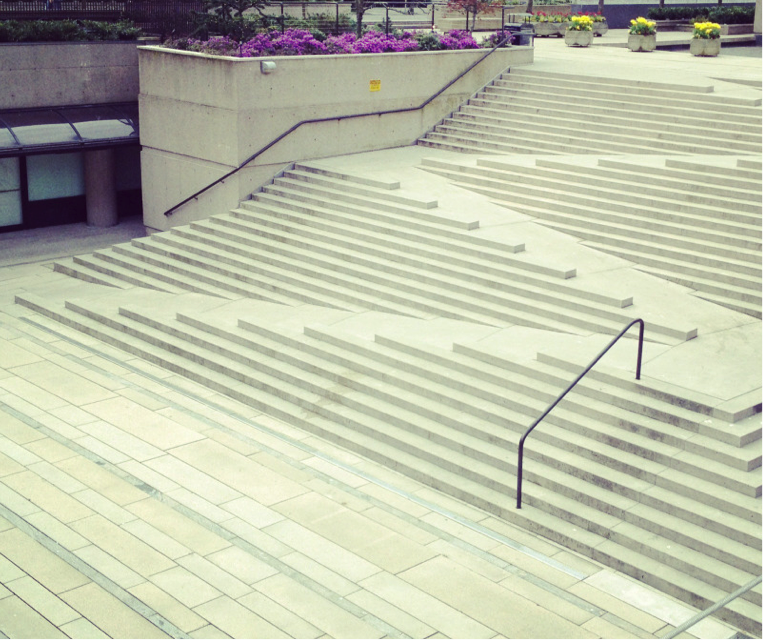
If you are not familiar with Universal Design think of a building that has a ramp built into the stairway leading up to the doors. All is blended and everyone has equal access. This is a wonderful feature for a building but for the classroom it is something entirely different. In a lesson, this means you must reach every student where they are. So essentially you are teaching to the lowest ability while keeping all others engaged and still teacher the material to the rigor that is expected. The assumption is if a student is not learning or mastering an objective the responsibility falls to the teacher – period. This is not a bad concept; lots of gaps are filled in when this is carried out in class. Teachers, good ones, do this anyway. The issue is the incredible pressure and impossible task given to teachers.
Students, no matter the level they arrived at the beginning of the year are expected to be on level by the time they leave. Again, I am not saying this is bad. Most teachers want their students to success. But consider this, your class of 20 first graders, you get four who are still working on K standards – 2 who did not meet enough K standards to pass but were moved up anyway and the teacher has to bring them to grade level, however long that takes, and still is responsible for the current year standards.
Factor back in Universal Design, and you are teaching K standards to your first grade class all the way until December and those on grade level or above are often lost in the chaos.
All students are not equal. Different abilities, backgrounds, home-life, and socio economic status make students wonderfully diverse. Yet a teacher from a school in an affluent neighborhood with parents who are able to volunteer and where thousands of dollars are raised through Parent/Teacher Organization (PTO or PTA) is directly compared to a teacher in a school with a different socio economic level, parents who work hard and may not be able to volunteer during school hours, have smaller number of students and therefore less government money, and maybe a few hundred dollars in their PTO/PTA fund (or NO money, one year copy paper was rationed, another year there was no money to purchase printer toner).
Finally, at the end of the year, there is a test. Written tests with one correct answer have given way to computer tests with one correct answer. If a 6 year old is bored or does not want to test that day is perceived to have made little or no progress.
Teachers are given a very challenging task and our race to the top has made our leaders crazy with expectations, numbers, and snapshot results. How about focusing on the student, push them – Yes, hold them to high expectations – Yes, but recognize differences and appreciate and praise accomplishments and realize in the United States we education EVERYONE. Education is not reserved for a few and our “ranking” reflects that. Stop putting unrealistic expectations on teachers and compensate them well for the hard work they do. Let children be children. The goal is not how soon you can shove an electronic device in their hands. If Universal Design is the way to teach, then lower class size to 12-15 and hire more teachers with competitive and attractive pay. One size does NOT fit all.